How to Choose a Website and App Development Partner for Digital Transformation
A guide to choosing a website and application partner that can improve efficiency, control, sales performance, and profitability.

Choosing a website and application development partner is not a cosmetic decision. It determines whether digital transformation delivers faster processes, measurable sales activity, stronger operational control, and reliable management data.
Many companies invest in a website or application but end up with a digital interface that remains disconnected from daily operations.
The objective is not simply to find the lowest price. A capable partner turns real business problems into a secure, scalable, and profitable digital system.
Digital Transformation Is More Than Having a Website
A corporate website remains essential for credibility, search visibility, information, and lead conversion.
The larger impact appears when forms feed a CRM, transactions update inventory, management sees current reports, customers receive notifications, and teams work from the same source of truth.
A business begins to transform when technology changes how work is performed, not only where information is displayed.
How Digital Transformation Improves Profitability
Digital transformation creates value through faster response times, fewer lost leads, more accurate inventory, reduced data entry, consistent pricing, and decisions based on current information.
Integrated systems reduce operational leakage by recording prices, discounts, transactions, returns, stock movement, and user authorization in one controlled workflow.
Websites and applications also help companies build channels and customer data assets they own instead of depending entirely on third-party platforms.
Signs Your Business Needs an Integrated System
The same information is entered repeatedly by sales, administration, warehouse, and finance.
Management must contact several people to understand sales, inventory, receivables, orders, or customer issues.
The company has multiple branches, outlets, resellers, or sales channels that require consistent permissions, approvals, and reporting.
The business wants AI or automation, but its underlying data and workflows remain fragmented.
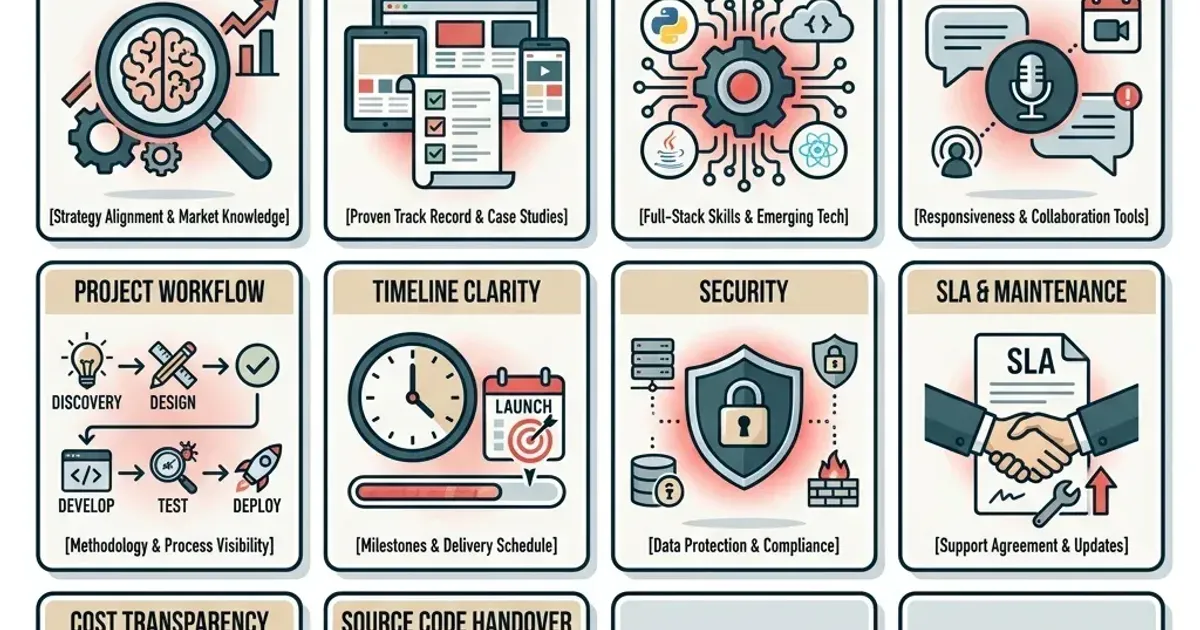
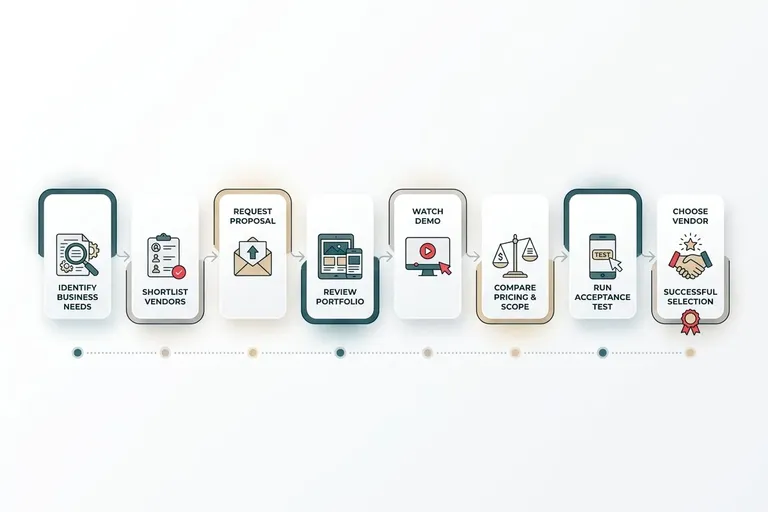
Seven Criteria for Selecting the Right Vendor
1. Business Understanding Before Technology
A capable vendor asks about objectives, users, workflows, data, risks, sales channels, and success indicators before recommending a technology stack.
2. Clear Business Impact for Every Feature
Each feature needs a reason. CRM prevents lost leads. Dashboards support faster decisions. Inventory integration prevents sales of unavailable products.
3. Scalable and Modular Architecture
Products, branches, roles, payment methods, and integrations will change. The system should support new modules without requiring a complete rebuild.
4. Ownership and Administrative Access
The agreement should explain ownership of domains, source code, databases, hosting accounts, design assets, documentation, and administrator access.
5. Security by Design
Security includes permissions, input validation, secret management, personal data protection, backups, audit logs, dependency updates, and environment separation.
6. Transparent Scope and Cost
A healthy proposal separates development, infrastructure, third-party services, maintenance, support, migration, and out-of-scope changes.
7. Testing, Documentation, and Support
User roles, transactions, integrations, validation, responsive behavior, performance, and failure scenarios require testing.
The client also needs documentation, training, bug reporting, warranty terms, and clear service levels.
From Manual Operations to a Connected Workflow
Consider a distributor that receives orders through chat. Sales forwards details to administration, administration contacts the warehouse, and finance prepares an invoice.
With an integrated system, sales creates quotations from controlled product and price data. Inventory is visible by warehouse, discounts follow approval limits, and accepted orders reserve stock.
The company gains faster customer response, fewer errors, better discount control, customer history, sales forecasting, and improved replenishment decisions.
How to Start Without Wasting the Budget
Begin with a process audit rather than building every module at once.
Select problems that consume the most time, create the greatest risk, or sit closest to revenue.
Build a usable first release with real data, secure roles, and an end-to-end workflow. Then continue in measurable phases.
AI, Omnichannel, and Current Digital Trends
AI can summarize conversations, classify leads, draft responses, identify patterns, and accelerate content work.
It should be added on top of well-structured data and controlled workflows.
Omnichannel means keeping inventory, pricing, promotions, customers, and reporting consistent across channels.
How Titan Tech Approaches Digital Transformation
Titan Tech begins by understanding business goals, users, workflows, data, integrations, and risks.
Solutions may include corporate websites, web applications, mobile applications, dashboards, CRM, internal systems, integration, and workflow automation.
The objective is stronger control, faster service, reliable sales follow-up, customer data ownership, and sustainable growth.
Frequently Asked Questions
How much does a business website or application cost?
Cost depends on workflow complexity, roles, integrations, design, data migration, security, and support. Fair comparison requires equivalent scope.
Does a small business need a custom application?
Not always. A small business may begin with an effective website, focused automation, or a modular system.
How can a company avoid vendor lock-in?
Clarify contracts, account access, documentation, source code, databases, and handover procedures.
Conclusion
The right development partner understands business problems, defines priorities, explains impact, builds secure architecture, and supports adoption.
Effective digital transformation improves profitability through faster operations, stronger control, cleaner data, better customer experience, and reliable sales follow-up.

- Author
- Titan Tech Editorial
- Reading time
- 9 minutes
- Published
- August 7, 2026
- Content updated
- August 3, 2026